What is breathwork?
Types, benefits and how to start.
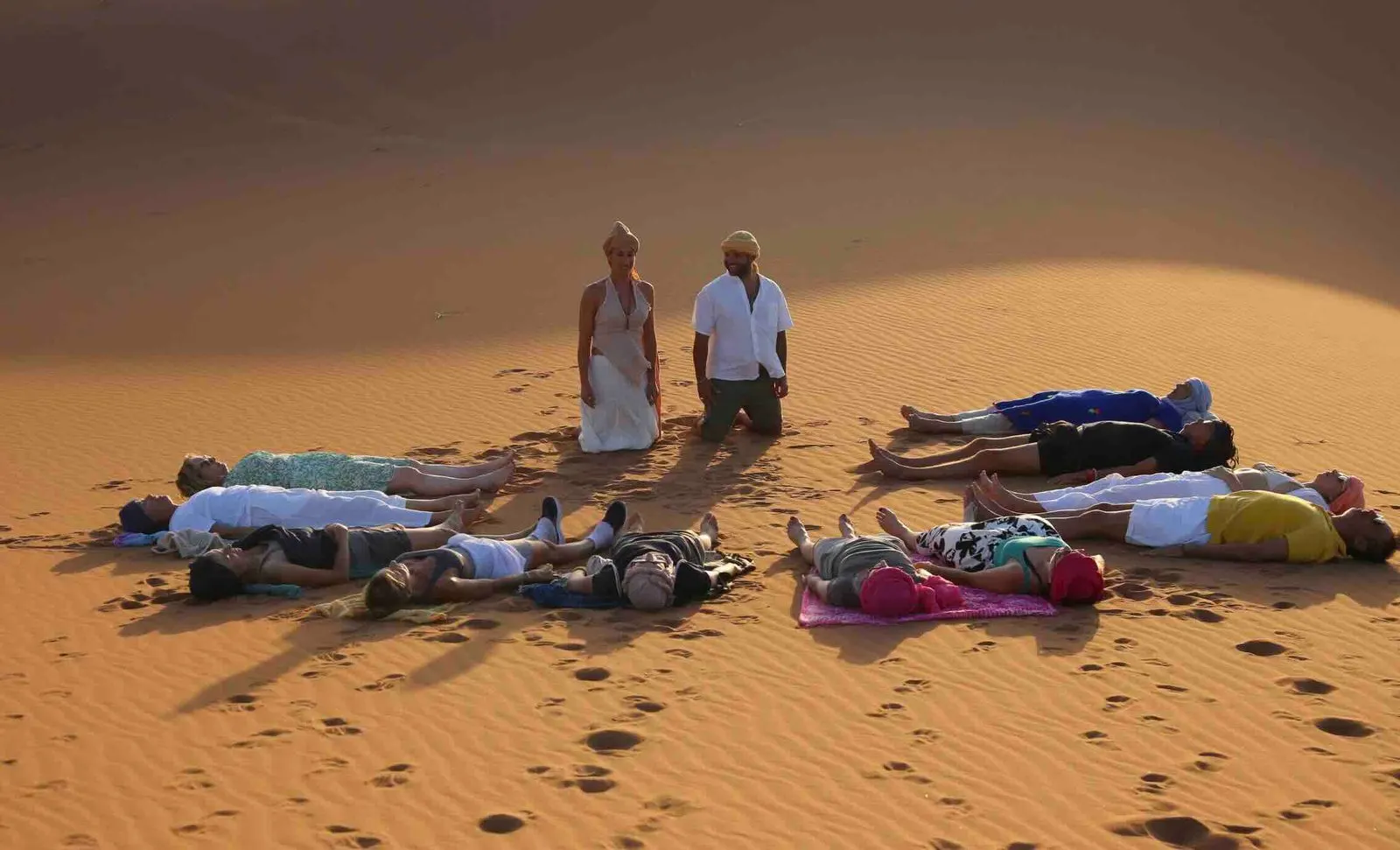
Breathwork is the name for practices that use conscious, guided breathing to change how you feel, in body and mind. Some slow the breath down to calm the nervous system. Others speed it up to energise and bring emotions to the surface. It is not one technique but a family, and choosing the right technique matters more than the word.
Where does breathwork come from?
Breath practices are ancient: yoga has worked with the breath for centuries under the name pranayama. In the West, modern breathwork took shape in the 1970s, with rebirthing, developed by Leonard Orr, and holotropic breathwork, created by Stanislav and Christina Grof.
More recently, the Wim Hof method and SOMA Breath have brought breathwork to a much wider public, along with slow-breathing practices such as cardiac coherence.
What are the main types of breathwork?
The family is wide. Here are the names you will meet most often.
| Type | How it works | Intensity |
|---|---|---|
| Slow breathing (cardiac coherence, resonant breathing) | About six breaths a minute, even and calm | Gentle |
| Pranayama (alternate nostril, kapalabhati) | Yogic breathing patterns, from calming to energising | Gentle to activating |
| Rebirthing | Connected breathing, with no pause between the in-breath and the out-breath | Intense |
| Holotropic breathwork | Fast, deep breathing with evocative music, lying down, in pairs | Intense |
| Wim Hof method | Rounds of deep breaths followed by a hold on empty lungs | Intense |
| SOMA Breath | Rhythmic breathing, breath holds and music | Gentle to intense |
| 9D Breathwork | Guided breathwork with immersive audio in headphones | Gentle to intense |
What are the benefits of breathwork?
The strongest evidence concerns slow breathing, linked to higher heart rate variability and to feeling calmer and more alert (Zaccaro et al., 2018). Five minutes a day of cyclic sighing improved mood in a 2023 Stanford study (Balban et al., 2023).
Across randomised controlled trials, breathwork is associated with lower self-reported stress than control conditions (Fincham et al., 2023). Many people also describe emotional release, clarity and a sense of connection. Those experiences are real, but they are not a medical treatment.
Is breathwork dangerous?
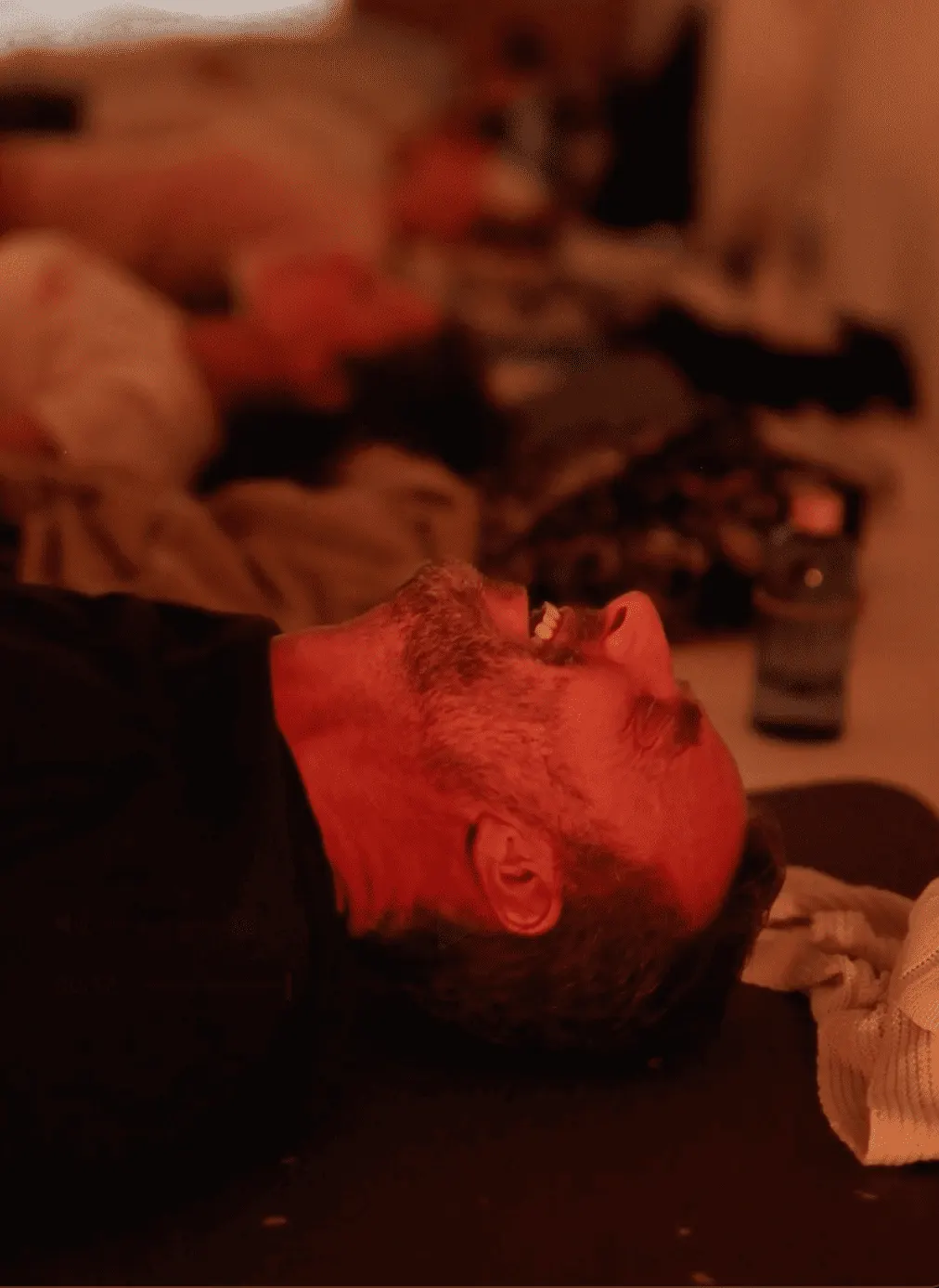
Slow techniques are low risk for most people. Fast breathing and breath-holds change the chemistry of your blood and are not for everyone: they are not recommended without medical advice in pregnancy, cardiovascular disease, high blood pressure, epilepsy or severe psychiatric conditions. Never practise them in water or while driving. Everything is explained in Is breathwork dangerous?
How do you start?
Four steps, in this order:
- Try five minutes of cardiac coherence at home with our free timer.
- Explore the other gentle techniques in the Breath Bank.
- Join a guided session, where someone watches over you and helps you integrate what comes up.
- Tell the facilitator about any health condition before you start.
What does breathwork look like at EMME?
Melissa Sapmaz and Emmanuel Desormeaux are certified facilitators trained in SOMA Breath, Holosomatic and 9D Breathwork. Their sessions in Gavà Mar, near Barcelona, combine breath, movement and Emmanuel's music, and often begin with SUCO active meditation.
Frequently asked questions
What is breathwork, in one sentence?
A family of conscious breathing practices used to change your physical and emotional state, from gentle calming techniques to intense, activating ones.
Is breathwork the same as conscious breathing?
Conscious breathing is the basis: paying attention to the breath and guiding it. Breathwork names the structured techniques built on it.
What is rebirthing?
A breathwork technique developed by Leonard Orr in the 1970s, based on connected breathing with no pause between inhaling and exhaling. It is intense and should be guided.
What does breathwork feel like?
Gentle techniques feel calming. Faster ones can bring tingling in the hands, waves of emotion, heat or a deep calm afterwards. You can always slow down.
Sources
- Fincham G. W., Strauss C., Montero-Marin J. & Cavanagh K. (2023). Effect of breathwork on stress and mental health: a meta-analysis of randomised-controlled trials. Scientific Reports, 13:432.
- Zaccaro A. et al. (2018). How breath-control can change your life: a systematic review on psycho-physiological correlates of slow breathing. Frontiers in Human Neuroscience, 12:353.
- Balban M. Y. et al. (2023). Brief structured respiration practices enhance mood and reduce physiological arousal. Cell Reports Medicine, 4(1):100895.
Rather live it than read about it?
Write to us on WhatsApp, +34 687 950 352: we tell you the next session in Gavà Mar, Castelldefels or Sitges.
Keep reading
Workplace wellbeing. What a session can change, and what it cannot.
Workplace wellbeing sorted honestly: what belongs to how work is organised, what a collective practice can actually change in an hour, and where the line sits.
Team building activities. What each one builds, and what it asks of your team.
Team building activities sorted by what they ask of a group: what each family builds, who it quietly excludes, and when more energy backfires on a team.
What is rebirthing? Origins, a real session, and the cautions.
Rebirthing breathwork: where it comes from, what a session involves, why it is not the restraint practice of the same name, and who should avoid it.
Holotropic breathwork: what it is, a session, the risks.
Created by Stanislav and Christina Grof, it combines fast breathing and evocative music. How a session works, its risks and gentler alternatives.
The Wim Hof method: breathing, benefits and contraindications.
How Wim Hof breathing is done step by step, what science says about its effects and who should not practise it, with the basic safety rules.
Breathing exercises for anxiety: five guided practices.
Five guided breathing exercises, each with a free timer, to calm anxiety within minutes and sleep better. What the science says, and when to ask for help.
What is a spiritual retreat? What really happens, hour by hour.
A spiritual retreat is a few days away from your routine, with a daily practice and a group. What a day really looks like, and who it does not suit.
How to choose a breathwork retreat. Seven questions, and the answers to expect.
Choosing a breathwork retreat: who facilitates, whether anyone screens you before booking, which techniques you will actually do, and how big the group is.
Ecstatic dance: what it is and how it differs from SUCO.
Ecstatic dance and SUCO both get you moving without steps to learn. One is free dance to a DJ set, the other a guided meditation in headphones. Which suits you?
How to choose a spiritual retreat near Barcelona.
Silent, yoga, breathwork or therapeutic: how to choose a spiritual retreat near Barcelona, which questions to ask the organiser and which red flags to avoid.
Is breathwork dangerous? Risks, precautions and benefits.
Slow breathwork is low risk for most people. Fast breathing and breath-holds are another story: what happens in the body, who should avoid it, how to stay safe.
Types of meditation: which one suits you, and where in Barcelona.
Seated, guided, active or breath-based: the main types of meditation for beginners, which one suits you, how to try it free and where in Barcelona.