Team building activities.
What each one builds, and what it asks of your team.
Most lists of team building activities are sorted by setting: indoors, outdoors, online. That is the least useful way to choose. What separates one activity from another is what it asks of the people doing it: to compete, to perform in front of colleagues, to solve something, to make something together, or simply to settle. Start from the state your team is actually in, and the list gets short very fast.
What counts as a team building activity?
Any organised activity where the point is the group rather than the task. The work itself is a pretext: a meal, a game, a workshop, a practice. What makes it team building is that the organisation is paying attention to how people are with each other afterwards.
That is a wide definition, and deliberately so. It includes the escape room and it includes a shared lunch with no programme at all. The useful distinction is not indoors against outdoors, or paid against free. It is how much activation the format demands from a group that may already have too much.
The families of activity, and what each one asks
Six families cover almost everything on the market. The third column is the one worth reading twice, because it is the one that decides whether an afternoon lands or backfires.
| Family | What it tends to build | What it asks | When it backfires |
|---|---|---|---|
| Competition: gymkhanas, regattas, sports tournaments, quizzes | Energy, a shared story, visible winners | Physical effort and appetite for rivalry | On a depleted team, or one where a recent reorganisation already set people against each other |
| Joint creation: cooking workshops, building challenges, craft sessions | Cooperation on something concrete, a levelling of hierarchy | Willingness to be a beginner in public | When the result gets judged, and the workshop quietly becomes a competition |
| Problem solving: escape rooms, logic games, treasure hunts | Role-taking, a read on who organises and who follows | Speed, and being comfortable speaking up in a group | It rewards the most assertive voices and leaves the rest as spectators |
| Learning: training, talks, facilitated workshops | Shared vocabulary, a frame for talking about work | Attention, after a day that already demanded plenty | When it is really a meeting wearing a different name |
| Pure social: meals, afterworks, offsite free time | Informal links, the conversations that never happen at a desk | Almost nothing, which is its strength | It consolidates existing groups rather than mixing them, and it excludes those who do not drink or cannot stay late |
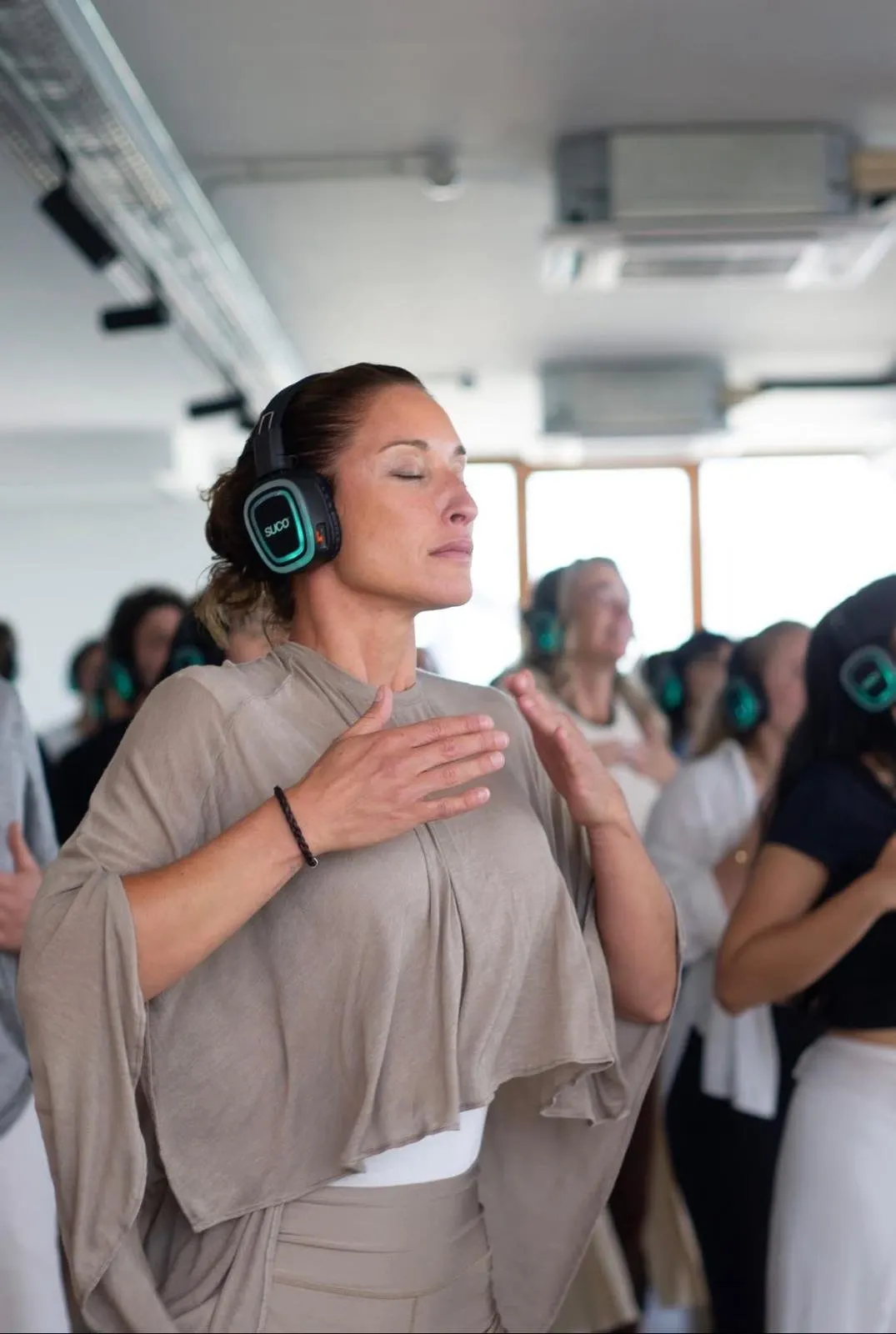
| Regulation: breathing practice, active meditation, yoga, sound journeys | A drop in collective tension, attention that returns | Very little effort, but a little trust | When it is sprung on people with no explanation, or framed as therapy |
The question that sorts the choice: more energy, or less?
Nearly every activity in the first four families adds arousal. It asks a team to go faster, push harder, perform, win. That is the right answer for a team that is flat, bored, newly formed, or that has never had a shared story.
It is the wrong answer for a team coming out of a hard quarter, a merger, a wave of departures or a launch that ate everyone's evenings. Those teams are not short of activation. They have too much of it, and an afternoon of competition sends them back to the desk more tired than they arrived, with the vague sense that the company has not understood anything.
So the honest first question is not which activity. It is: is this group under-stimulated, or over-stimulated? Nobody can answer that from a catalogue, and it is the question the lists on page one never ask.
The participation tax: who quietly opts out
Every format charges a price in visibility, and it is rarely priced in. A karaoke, an improvisation workshop, a sports tournament: all of them ask people to be watched by their colleagues, and to be seen being bad at something in front of someone who writes their review.
The people who pay that tax hardest are the quietest ones, those who are new, those who speak the working language less well, and those going through something they have told nobody about. They do not refuse. They turn up, stay at the edge, and leave slightly more outside the group than when they arrived. The activity has then produced the exact opposite of its purpose, and the feedback form will not show it, because nobody writes that on a form their manager reads.
Two practical consequences. Offer a real way out that costs nothing socially, which means a role in the activity rather than a chair against the wall. And prefer formats where attention is not on individuals: in a practice done with headphones on, nobody is watched, which is a large part of why people let go in it.
Does team building actually work?
Honestly: it depends so much on the format that the question is close to meaningless, and we are not going to produce a statistic we have not measured. What we can say is what we see, which is that the activity matters less than two things around it. Whether people were given a say in the choice, and whether anything in the working week changes afterwards.
An afternoon that contradicts the rest of the year does not survive the year. If the problem is a workload nobody will discuss, no activity fixes it, and an expensive one makes the gap more visible.
On the regulation family specifically there is published evidence, and it is worth being precise about its scope. A 2023 meta-analysis of randomised controlled trials found breathwork associated with lower self-reported stress than control conditions (Fincham et al., 2023), and a controlled study found that brief daily breathing practices improved mood and reduced physiological arousal (Balban et al., 2023). Both are about breathing practices in individuals. Neither is a study of team building, and neither says an afternoon with your colleagues will change how your team works.
How we choose, when a team asks us
We only work in the last family, so take this as the view from one corner rather than a neutral survey. What we do is a session built around guided breath, movement and original electronic music composed and played live for the group.
The first conversation is not about the activity. It is about what the team has just been through and what it should leave with, because those two answers decide the shape of everything else. A group that has just merged needs something different from one coming off a brutal quarter, even when the request arriving in the inbox is worded identically.
If what a team needs is competition and adrenaline, we say so and we are not the right call. The details of our own format, who facilitates it and what we need to know to propose anything are on our wellbeing team building page.
How we put this together
The six families and the third column come from running group sessions week in, week out, and from the questions HR teams and team leads actually send us before booking anything. They are not a market study, and the ordering is a judgement, not a measurement.
What we have deliberately not written: no prices, no durations, no group sizes for formats we do not run, and no claim that one family performs better than another. What we run is a practice of self-regulation, movement and connection. It is not a therapy and it does not replace medical or psychological support.
Frequently asked questions
What are the best team building activities?
There is no single answer, and any list that gives one is guessing about your team. The useful sorting is by what the activity asks: competition and performance for a group that is flat or newly formed, regulation and shared time for one that is depleted. Match the format to the state the team is in.
What team building activity works for a tired team?
Something that lowers activation rather than adding to it: a shared meal with no programme, a breathing or active meditation session, an offsite with real free time. A competitive format on an exhausted team usually sends people back to work more tired than they came.
How do you include people who do not want to participate?
Give them a role rather than an exemption. A job inside the activity, timekeeping, photographs, helping facilitate, keeps someone in the group without putting them on display. An exemption that means sitting against a wall watching colleagues is a visible exclusion, and people feel it.
Are indoor or outdoor team building activities better?
Neither, and the question hides the one that matters. The setting changes the logistics and the weather risk. What changes the outcome is how much the format demands of people and how visible it makes them.
Does team building actually improve how a team works?
Not on its own. What we see is that the choice being discussed with the team beforehand, and something actually changing in the working week afterwards, matter more than which activity was picked. An afternoon that contradicts the rest of the year does not survive it.
What counts as a wellbeing team building?
A format whose purpose is to lower collective tension rather than raise performance: breathing practice, active meditation, yoga, sound journeys. It asks little physical effort and a little trust, and it is the one family that suits a group that already has too much activation.
Do people need to be fit or know how to dance for an active session?
No, and this is the most frequent worry we are asked about. In a session done with wireless headphones nobody performs and nobody is watched, because each person stays inside their own experience. That is usually what makes it possible for people to take part at all.
Should the team choose the activity?
Ask them at least what they do not want. It costs one message, it removes the formats that would have excluded people, and it changes how the day is received: an activity chosen for a team lands differently from one chosen with it.
Sources
- Fincham G. W., Strauss C., Montero-Marin J. & Cavanagh K. (2023). Effect of breathwork on stress and mental health: a meta-analysis of randomised-controlled trials. Scientific Reports, 13:432.
- Balban M. Y. et al. (2023). Brief structured respiration practices enhance mood and reduce physiological arousal. Cell Reports Medicine, 4(1):100895.
Rather live it than read about it?
Write to us on WhatsApp, +34 687 950 352: we tell you the next session in Gavà Mar, Castelldefels or Sitges.
Keep reading
Workplace wellbeing. What a session can change, and what it cannot.
Workplace wellbeing sorted honestly: what belongs to how work is organised, what a collective practice can actually change in an hour, and where the line sits.
What is rebirthing? Origins, a real session, and the cautions.
Rebirthing breathwork: where it comes from, what a session involves, why it is not the restraint practice of the same name, and who should avoid it.
What is breathwork? Types, benefits and how to start.
What breathwork is, its main types (holotropic, rebirthing, Wim Hof, SOMA, pranayama), what science says about its benefits and how to start safely.
Holotropic breathwork: what it is, a session, the risks.
Created by Stanislav and Christina Grof, it combines fast breathing and evocative music. How a session works, its risks and gentler alternatives.
The Wim Hof method: breathing, benefits and contraindications.
How Wim Hof breathing is done step by step, what science says about its effects and who should not practise it, with the basic safety rules.
Breathing exercises for anxiety: five guided practices.
Five guided breathing exercises, each with a free timer, to calm anxiety within minutes and sleep better. What the science says, and when to ask for help.
What is a spiritual retreat? What really happens, hour by hour.
A spiritual retreat is a few days away from your routine, with a daily practice and a group. What a day really looks like, and who it does not suit.
How to choose a breathwork retreat. Seven questions, and the answers to expect.
Choosing a breathwork retreat: who facilitates, whether anyone screens you before booking, which techniques you will actually do, and how big the group is.
Ecstatic dance: what it is and how it differs from SUCO.
Ecstatic dance and SUCO both get you moving without steps to learn. One is free dance to a DJ set, the other a guided meditation in headphones. Which suits you?
How to choose a spiritual retreat near Barcelona.
Silent, yoga, breathwork or therapeutic: how to choose a spiritual retreat near Barcelona, which questions to ask the organiser and which red flags to avoid.
Is breathwork dangerous? Risks, precautions and benefits.
Slow breathwork is low risk for most people. Fast breathing and breath-holds are another story: what happens in the body, who should avoid it, how to stay safe.
Types of meditation: which one suits you, and where in Barcelona.
Seated, guided, active or breath-based: the main types of meditation for beginners, which one suits you, how to try it free and where in Barcelona.