Types of meditation:
which one suits you, and where in Barcelona.
If you have tried to meditate and your mind would not stop, you did not fail: you probably picked the wrong door. Seated meditation suits people who can already be still. Active meditation, like SUCO, moves the body first so the mind can follow. Breath-based practices sit in between and work in five minutes. Barcelona has all of them.
What are the main kinds of meditation?
Most meditation in Barcelona falls into one of these four.
| Type | How it works | Easier if | Harder if |
|---|---|---|---|
| Seated (mindfulness, zen, vipassana) | Sitting still, attention on the breath, the body or thoughts | You can sit a while without fidgeting | Your mind races or your body is restless |
| Guided (apps, audio) | A voice leads you, often for 10 to 20 minutes | You want to start at home | You need other people around to commit |
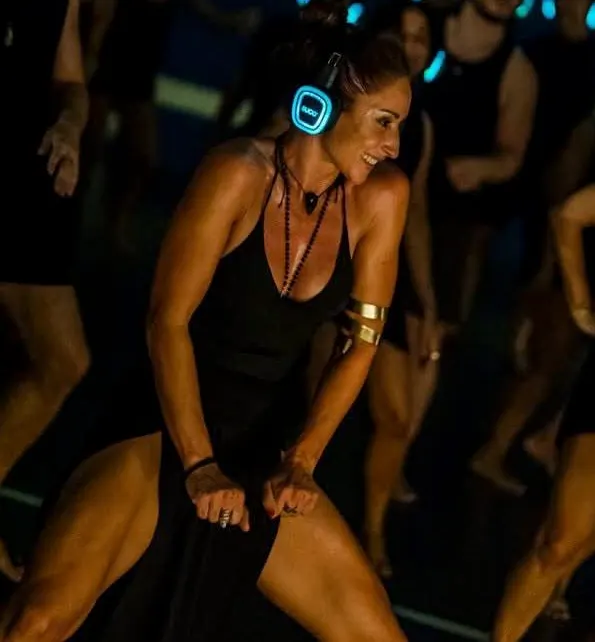
| Active (such as SUCO) | Movement, shaking and music, then stillness | You think a lot and feel little | You want total calm from the first minute |
| Breath-based | A breathing pattern shifts your state | You want an effect within minutes | You dislike counting |
Why doesn't sitting still work for everyone?
Seated meditation asks a busy nervous system to calm down by itself. For many people, especially those who spend the day in their heads, that is like asking a racing engine to idle. The result is frustration, and the conclusion that meditation is not for them.
Active meditation reverses the order. You move, shake and breathe first. When the body has spent some of its charge, stillness tends to arrive on its own. That is the idea behind SUCO.
Can you meditate in Barcelona for free?
Yes. Many centres, community groups and traditions in Barcelona offer free or donation-based introductions, and the parks and beaches are open to anyone with ten minutes.
You can also start at home today. Our Breath Bank has twelve breathing techniques with a free guided timer. Five minutes of cardiac coherence is a good first one.
Where can you meditate by the sea, outside the city?
Barcelona is dense and loud, which is a good reason to practise outside it. EMME is based in Gavà Mar, on the coast south of the city, next to Castelldefels and on the way to Sitges. We run SUCO and breathwork sessions there, in groups or privately.
How do you choose, in one minute?
Pick the line that sounds like you:
- You can sit still and want depth: a seated meditation group.
- You want to start alone at home: a guided app or our Breath Bank.
- Your mind never stops: active meditation such as SUCO.
- You want a quick effect before a stressful moment: a breathing technique such as the physiological sigh.
Frequently asked questions
What is the best type of meditation for beginners?
The one you will actually repeat. Many beginners do better with guided or active meditation than with silent sitting, because there is something to follow.
How long should I meditate each day?
Five to ten minutes a day is a realistic start. Regularity matters more than length.
Is active meditation real meditation?
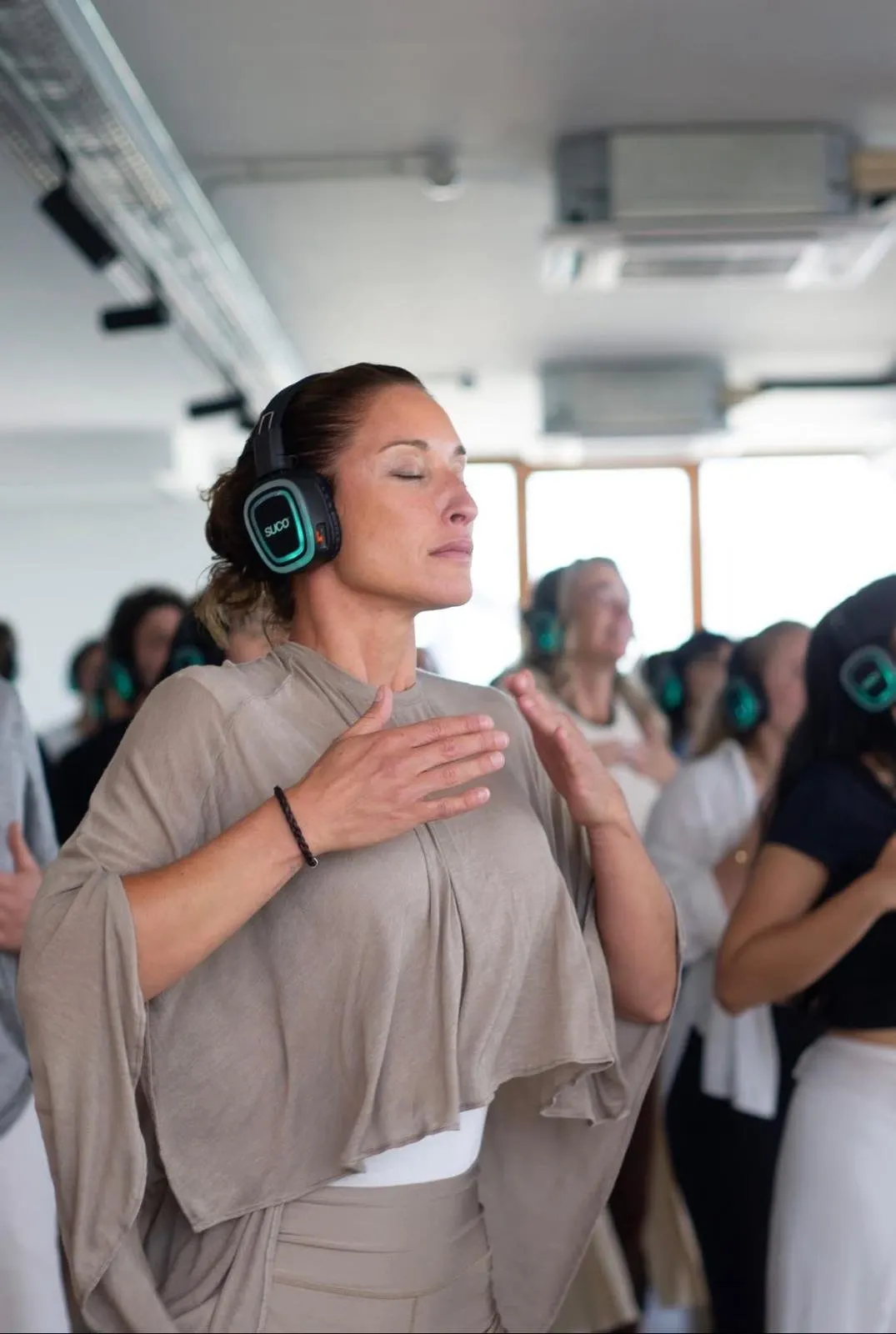
Yes. It uses movement as the way in, but it aims at the same thing: presence and stillness. In SUCO, stillness arrives at the end, once the body is ready.
Where can I do active meditation near Barcelona?
EMME facilitates SUCO in Gavà Mar and on the Garraf coast. Ask us on WhatsApp for the next date.
Rather live it than read about it?
Write to us on WhatsApp, +34 687 950 352: we tell you the next session in Gavà Mar, Castelldefels or Sitges.
Keep reading
Workplace wellbeing. What a session can change, and what it cannot.
Workplace wellbeing sorted honestly: what belongs to how work is organised, what a collective practice can actually change in an hour, and where the line sits.
Team building activities. What each one builds, and what it asks of your team.
Team building activities sorted by what they ask of a group: what each family builds, who it quietly excludes, and when more energy backfires on a team.
What is rebirthing? Origins, a real session, and the cautions.
Rebirthing breathwork: where it comes from, what a session involves, why it is not the restraint practice of the same name, and who should avoid it.
What is breathwork? Types, benefits and how to start.
What breathwork is, its main types (holotropic, rebirthing, Wim Hof, SOMA, pranayama), what science says about its benefits and how to start safely.
Holotropic breathwork: what it is, a session, the risks.
Created by Stanislav and Christina Grof, it combines fast breathing and evocative music. How a session works, its risks and gentler alternatives.
The Wim Hof method: breathing, benefits and contraindications.
How Wim Hof breathing is done step by step, what science says about its effects and who should not practise it, with the basic safety rules.
Breathing exercises for anxiety: five guided practices.
Five guided breathing exercises, each with a free timer, to calm anxiety within minutes and sleep better. What the science says, and when to ask for help.
What is a spiritual retreat? What really happens, hour by hour.
A spiritual retreat is a few days away from your routine, with a daily practice and a group. What a day really looks like, and who it does not suit.
How to choose a breathwork retreat. Seven questions, and the answers to expect.
Choosing a breathwork retreat: who facilitates, whether anyone screens you before booking, which techniques you will actually do, and how big the group is.
Ecstatic dance: what it is and how it differs from SUCO.
Ecstatic dance and SUCO both get you moving without steps to learn. One is free dance to a DJ set, the other a guided meditation in headphones. Which suits you?
How to choose a spiritual retreat near Barcelona.
Silent, yoga, breathwork or therapeutic: how to choose a spiritual retreat near Barcelona, which questions to ask the organiser and which red flags to avoid.
Is breathwork dangerous? Risks, precautions and benefits.
Slow breathwork is low risk for most people. Fast breathing and breath-holds are another story: what happens in the body, who should avoid it, how to stay safe.